
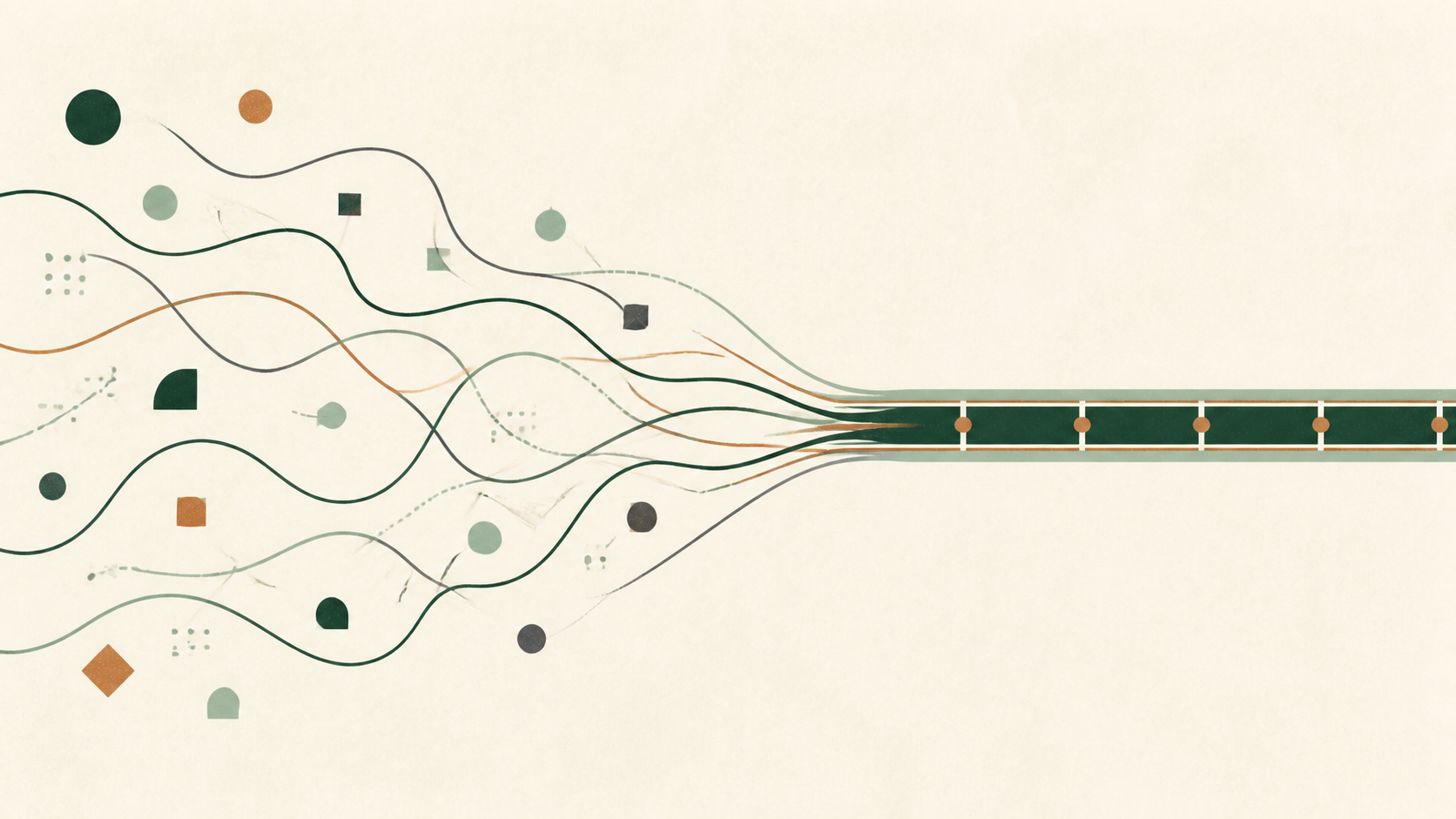
Most teams have already started. One person uses AI to prepare meeting notes. Someone else improves a client email. A third person may have a prompt they use every week. The work is faster, yet the business may barely see it.
Personal productivity is useful. It is also fragile. The process lives with the individual. Results can change with the tool or the source material. If that person leaves, the method may leave too.
The opportunity starts when a result is valuable often enough to repeat. Leadership can then decide whether it should become shared work. That decision needs a clear business outcome and an owner. It also needs confidence that the workflow is suitable for the information involved.
A measurable workflow goes beyond a collection of good prompts. It has a clear starting point. The team knows who uses it, and someone reviews the result. Leadership can compare the outcome with how the work happened before.
Approval matters because the workflow now represents the company. A draft may reach a client. A summary may shape a decision. Incomplete source material can also influence a recommendation.
The first workflow should be chosen carefully. A visible recurring task is easier to judge than an ambitious transformation. It gives the team a chance to see whether the gain holds up in real work.
Idea Pursuit helps Canadian SMBs make that transition. A Safe AI Workflow Review finds the workflow worth formalizing. Workflow design and approval turn the decision into a repeatable process. Implementation support puts it into use and measures what changed.
That is how personal productivity becomes business capability. The company gains a workflow it can trust, repeat and measure.